Author: Niraj Nanal, CFP^CM, RLP®
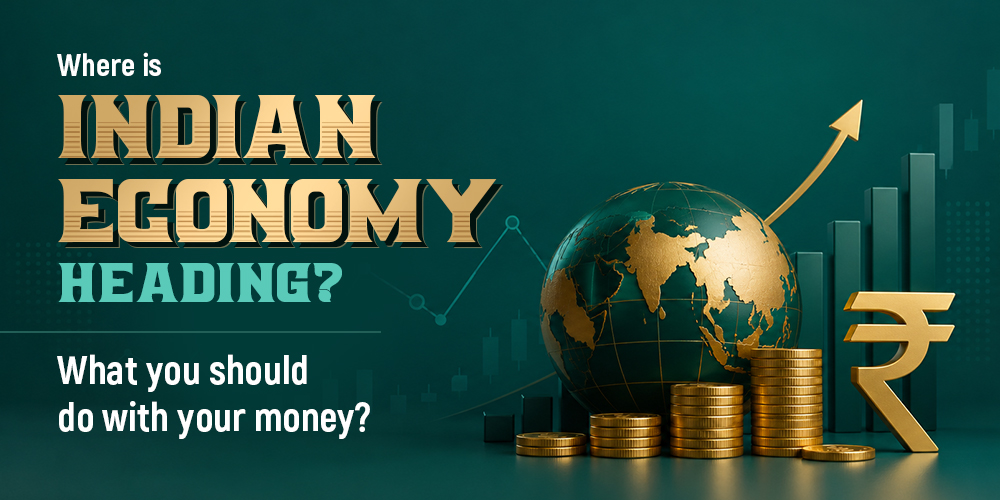
The Indian economy is navigating a period of uncertainty. A weakening rupee, elevated crude oil prices, inflation concerns, geopolitical tensions, and volatile financial markets have left many investors wondering: “Where is the economy heading, and what should I do with my money?” While the future direction of the economy is uncertain, one thing is clear: reacting emotionally to economic headlines is rarely a successful investment strategy. Instead of trying to predict every market move, investors should focus on building a financial plan that can withstand uncertainty and keep them on track toward their life goals.
Understanding the Current Economic Situation
Several factors are influencing the global and Indian economy today.
The Indian Rupee Has Weakened
The Indian Rupee is currently trading around Rs 95 per US Dollar, according to recent RBI exchange rate data. A weaker rupee increases the cost of imports, particularly crude oil, and can put pressure on inflation. For businesses that depend heavily on imported goods and raw materials, a weaker currency can increase operating costs and impact profitability.
Crude Oil Prices Remain Elevated
Crude oil prices continue to remain elevated due to on-going geopolitical tensions and supply concerns. This is particularly important for India because we import a significant portion of our energy requirements. Higher oil prices often lead to increased transportation, logistics, and manufacturing costs, which eventually affect consumers through higher prices.
Inflation Continues to Matter
Inflation may not always make headlines, but it directly impacts your daily life. When the prices of food, fuel, healthcare, education, and housing increase, the purchasing power of your money declines. This is why keeping large amounts of money idle for long periods can be detrimental to long-term wealth creation.
Increased Market Volatility
Global uncertainty, changing interest rate expectations, currency fluctuations, and geopolitical events have contributed to higher market volatility. While volatility can be uncomfortable, it is important to remember that market fluctuations are a normal part of investing.
The takeaway? Economic uncertainty is not unusual. Every decade experiences challenges. What matters is how prepared you are to navigate them.
What About Your Financial Plan?
When markets become volatile, investors often focus excessively on economic data and market forecasts. But your financial future is not determined by the next movement in crude oil prices or the next RBI policy announcement. It is determined by your ability to achieve your life goals.
Ask yourself:
- When do you want to retire?
- How much money will your children need for higher education?
- Do you plan to buy a house?
- What lifestyle do you want during retirement?
- What financial security do you want for your family?
A financial plan begins with these questions. The purpose of investing is not to outperform the market every year. The purpose of investing is to help you achieve your life goals.
A Financial Plan Helps You Make Proactive Decisions
One of the biggest advantages of having a financial plan is that it allows you to make proactive decisions instead of reactive ones. Without a plan, investors often make decisions based on emotions and headlines.
When markets fall, they panic. When markets rise sharply, they become overconfident.
As a result, many investors:
- Sell during market declines.
- Invest aggressively after markets have already rallied.
- Frequently switch investments based on recent news.
- Chase short-term performance.
These are reactive decisions. A financial plan changes the focus. Instead of asking: “What is happening in the market?” You start asking: “Am I still on track to achieve my goals?” This shift in thinking can significantly improve long-term investment outcomes.
The Importance of Proper Asset Allocation
Many investors spend enormous amounts of time searching for the best stock, mutual fund, or investment product. However, long-term investment success often depends more on asset allocation than on individual investment selection.
Asset allocation is the process of distributing your investments across different asset classes such as:
- Equity
- Debt
- Gold
- Cash and emergency reserves
- International investments
Different asset classes perform differently under varying economic conditions.
For example:
- Equities can help create long-term wealth.
- Debt investments can provide stability during volatile periods.
- Gold can act as a diversification tool during uncertain times.
- International investments can reduce concentration risk.
A well-diversified portfolio is not designed to maximize returns every year. It is designed to help investors stay invested through different market environments. The objective is not to predict the future. The objective is to be prepared for multiple possible outcomes.
Fear and Greed
Legendary investor Warren Buffett famously said: “Be fearful when others are greedy and greedy when others are fearful.”
Simple advice. But extremely difficult to follow.
When markets fall sharply and economic news becomes negative, many investors panic and sell their investments. Fear convinces them that things will only get worse. Ironically, when markets recover and optimism returns, many of those same investors rush back into the market after prices have already risen significantly. Greed convinces them that markets will continue rising forever.
This creates a destructive cycle:
- Fear leads investors to sell low.
- Greed leads investors to buy high.
Successful investing is rarely about predicting the next market move. It is about maintaining discipline during periods of uncertainty and staying committed to a long-term strategy. A well-structured financial plan helps investors avoid emotional decisions. Instead of reacting to headlines, they can evaluate whether their goals, portfolio, and asset allocation remain aligned. The goal is not to eliminate fear and greed. The goal is to ensure that these emotions do not dictate your financial decisions.
What Should You Do With Your Money Right Now?
Rather than reacting to economic headlines, consider taking the following steps:
- Review your financial goals.
- Ensure your emergency fund is adequate.
- Evaluate whether your current investments align with your risk profile.
- Review your asset allocation.
- Continue your SIPs and long-term investments.
- Rebalance your portfolio if required.
- Avoid making emotional investment decisions based on short-term market movements.
Final Thoughts
The current economic environment may create uncertainty, but uncertainty alone is not a reason to change your financial strategy. A well-crafted financial plan acts as a roadmap during both prosperous and challenging times. Rather than trying to predict the next market move, focus on building a portfolio that aligns with your goals, risk tolerance, and time horizon. Because successful investing is not about reacting to every headline. It is about staying committed to a plan that helps you achieve the life you want.
Need Help Building a Financial Plan?
If you would like professional guidance creating a goal-based financial plan and investment strategy, visit us at www.nirajnanal.com
Niraj Nanal, CFP^CM, RLP® has been working closely with working professionals, business owners and doctors for almost 20 years to help develop financial clarity and confidence. With his unique Life Planning approach, the goal is not just to build wealth but to make money a tool that supports a life you truly desire.
Frequently Asked Questions (FAQs)
No. Stopping SIPs during market downturns is one of the most common — and costly — mistakes investors make. Market dips mean your SIP buys more units at lower prices, which benefits you when markets recover. Consistent SIP investing through uncertainty is a core principle of long-term wealth creation.
A weaker rupee raises the cost of imports, particularly crude oil, which can push inflation higher and squeeze corporate margins for import-dependent businesses. For investors, this may reduce returns on debt instruments in real terms. Diversifying into gold or international assets can partially offset rupee depreciation risk.
Equity markets price in uncertainty over time. Historically, long-term equity investors who stayed invested through periods of economic uncertainty — including recessions, currency crises, and geopolitical events — have been rewarded. The key is aligning your equity exposure with your time horizon and risk tolerance, not with current news cycles.
Asset allocation means distributing your investments across equity, debt, gold, cash, and international assets. Each asset class responds differently to economic conditions. A well-allocated portfolio is not built to maximise returns in any single year — it is built to keep you invested and on track across all market environments.
Start with a review of your financial goals. Ask yourself: when do I need this money, how much do I need, and what risk can I tolerate? A goal-based financial plan gives you an objective framework to evaluate your portfolio — replacing emotional reactions to headlines with clear, purposeful decisions.