What is Lifestyle Inflation?
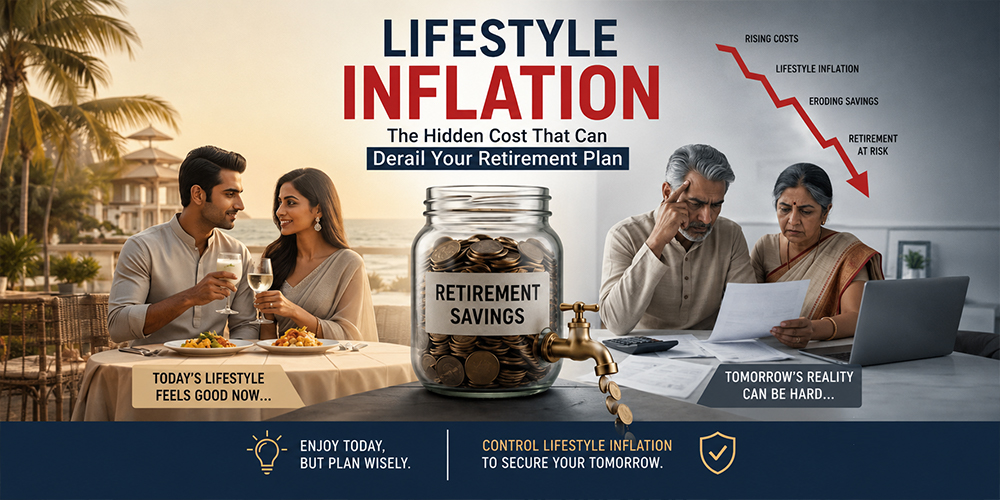
Lifestyle inflation happens when your spending increases as your income grows. Instead of simply saving or investing the extra income, you gradually upgrade your lifestyle. Over time, these upgrades become the new normal.
Most people believe inflation is measured only by CPI (Consumer Price Index) or WPI (Wholesale Price Index). While these indicators track the rising cost of goods and services, they don’t capture a much bigger financial challenge that affects almost everyone—Lifestyle Inflation.
Imagine you receive a salary hike. You decide to buy a better car, upgrade your smartphone, dine out more often, or plan international vacations instead of domestic trips.
None of these decisions are wrong. The problem begins when your expenses start growing as fast—or even faster—than your income.
Here are a few examples:
- Motorbike Upgrade: A Royal Enfield Himalayan 450 that cost around ₹3.70 lakh in 2024 now costs approximately ₹4.10 lakh. But many buyers won’t replace it with the same model—they’ll aspire to a more premium motorcycle with better features.
- Cars: A decade ago, a ₹5–6 lakh hatchback was a popular choice. Today, many first-time buyers prefer SUVs priced at ₹12–15 lakh.
- Smartphones: Upgrading from a ₹15,000 phone to an ₹80,000 flagship device.
- Travel: Moving from domestic holidays to international vacations.
- Dining: Choosing fine-dining restaurants instead of casual eateries.
This isn’t just inflation – it’s lifestyle inflation.
Why Lifestyle Inflation Can Hurt Your Financial Future?
Lifestyle inflation quietly reduces your ability to build wealth.
As expenses increase:
- Your monthly savings may not grow despite higher income.
- Investments get delayed.
- Financial goals such as retirement, children’s education, or financial independence become more difficult to achieve.
Many people wonder why they earn significantly more than they did ten years ago but still don’t feel financially comfortable. Lifestyle inflation is often the hidden reason.
The Retirement Planning Mistake
Most retirement calculators assume inflation of around 5–6%, based on CPI.
However, your personal inflation may be much higher because your lifestyle evolves over time.
Think about it:
- You may not replace your current car with another car in the same price range.
- Your travel expectations may increase.
- Healthcare expenses generally rise much faster than average inflation.
- A longer life expectancy means funding these higher expenses for many more years.
If your retirement planning considers only CPI inflation, you may underestimate the wealth required to maintain your desired lifestyle after retirement.
How to Control Lifestyle Inflation
You don’t have to stop enjoying your success. Instead, manage it wisely.
- Increase your SIP or investments every time your income rises.
- Follow a simple rule: invest first, spend later.
- Differentiate between genuine needs and lifestyle upgrades.
- Review your financial plan annually to ensure your goals remain on track.
Final Thoughts
Earning more should improve your life – not create financial stress in the future.
Lifestyle inflation is subtle because it happens gradually. The key is to enjoy your growing income while ensuring your wealth grows even faster.
At Niraj Nanal, Financial Life Planning we believe financial planning is not just about managing money, it’s about aligning your finances with the life you truly want to live. A well-designed financial plan accounts for both economic inflation and the lifestyle you aspire to maintain.
Niraj Nanal has helped many individuals to plan for their secured retirement and achieve their life goals.
If you’d like to build a retirement plan that reflects your real lifestyle goals, connect with the team at Niraj Nanal Financial Life Planning through www.nirajnanal.com.